
In hot, arid urban settings such as Phoenix, cooling system service revolves around managing persistent high ambient temperatures, elevated solar loads, and frequent dust intrusion. The concept involves routine inspections and maintenance tailored to long operational hours and coarse airborne particulates that can reduce heat-exchange efficiency. Technicians and property managers often evaluate system runtime patterns, heat-transfer surfaces, control calibration, and component wear to maintain cooling capacity. Attention to outdoor condenser performance, indoor airflow balance, and moisture control in specific building assemblies forms the practical core of servicing decisions in this climate.
Service in a desert environment typically emphasizes preventive activities that address accelerated component stress. This may include cleaning condenser coils more often, checking refrigerant charge given extended run times, and verifying fan motors and compressors under higher load cycles. Building envelope factors such as attic radiant barriers, window shading, and insulation levels can influence service priorities because they affect internal heat gain and the resulting cooling demand. Those managing or maintaining systems may prioritize interventions that preserve system capacity and reduce energy consumption without assuming uniform outcomes across different building types.
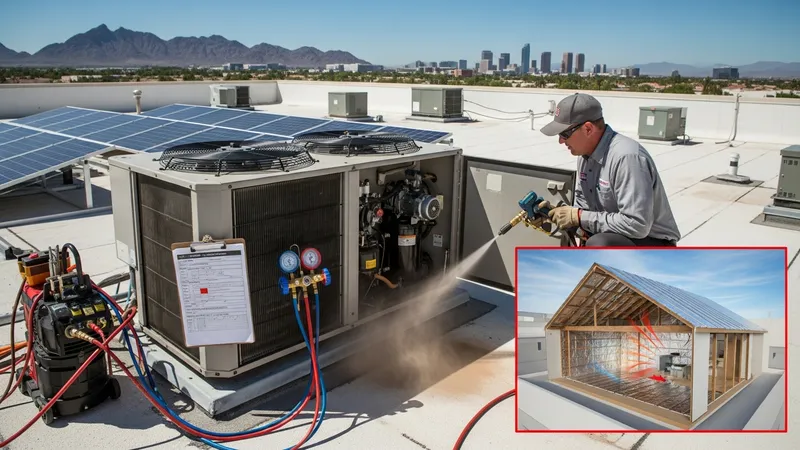
Comparative frameworks for service frequency often reflect local climate intensity and occupancy patterns rather than fixed schedules. In Phoenix-area residences and small commercial buildings, systems may run many hours per day during peak months, so service cycles typically occur more often than in temperate regions. Cost and resource trade-offs are framed around estimated runtime, equipment age, and indoor air quality needs. Neutral selection criteria for maintenance actions usually include observed airflow, measured refrigerant pressures, electrical draw, and visible coil condition rather than promotional metrics or guaranteed outcomes.
Operational diagnostics commonly employ straightforward measurements that can indicate declining performance without assuming a single cause. Technicians may use static pressure readings, temperature split across the evaporator, and amperage draw to assess system health. These indicators often point to issues such as restricted airflow, reduced refrigerant charge, or failing motors. In desert climates, dust accumulation on coils can mimic refrigerant problems by reducing heat transfer, so interpretation of measurements often considers recent environmental exposure and recent filter change history.
Energy-consumption patterns in arid climates can influence maintenance priorities and component choices. Higher seasonal cooling loads may make variable-speed compressors and multi-stage systems relevant because they can run at lower capacity for long periods, potentially reducing cycling stress. Evaluation of such equipment generally considers upfront cost, expected operating patterns in the local climate, and projected efficiency under sustained high ambient temperatures. Information from U.S. government sources such as the Department of Energy may help frame efficiency characteristics without implying a universal recommendation.
Indoor air quality concerns and filter selection in desert settings balance particulate removal against airflow resistance. Increasing filter efficiency can reduce dust deposition on coils and duct surfaces, but higher-efficiency media often increases pressure drop across the system, which may affect blower performance if not matched to the unit. Duct sealing and targeted cleaning can reduce dust recirculation. These interventions are usually evaluated for their likely impact on cooling capacity and maintenance intervals rather than presented as absolute fixes.
In summary, service considerations for cooling systems in hot, arid urban areas center on managing extended runtime, dust-related losses in heat-exchange efficiency, component stress, and building-envelope interactions. Typical responses include more frequent coil and filter maintenance, attention to refrigerant and electrical diagnostics, and assessment of ventilation and duct integrity. The next sections examine practical components and considerations in more detail.
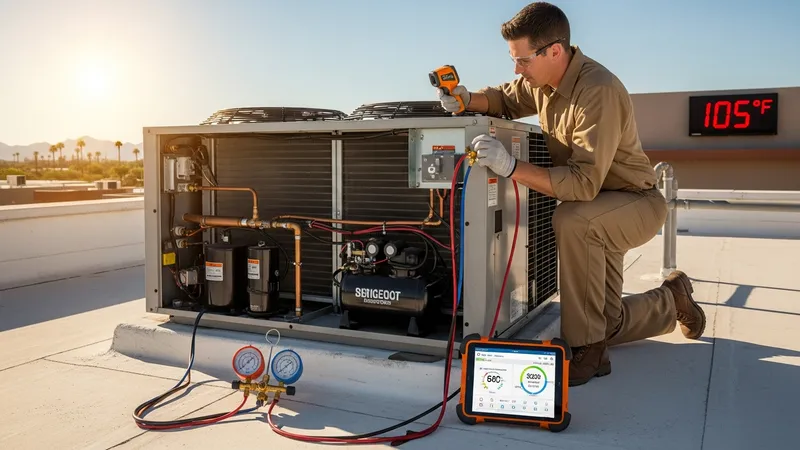
High daytime temperatures and intense solar radiation in Phoenix-area climates often increase hourly cooling loads compared with milder regions. Peak daytime highs can exceed 100 °F during summer months, which typically leads to extended daily compressor operation. System sizing and performance measurements therefore commonly account for longer duty cycles and higher sensible cooling demands. When assessing capacity, service professionals may consider factors such as roof reflectivity, window orientation, and internal gains from appliances and occupancy. These elements can influence whether a system is operating near its intended performance envelope under local summer conditions.
Load-related service checks frequently include evaluation of refrigerant charge relative to manufacturer specifications under real operating conditions. Long run times can mask under- or overcharge effects on measured temperature split, so careful measurement and interpretation are usually necessary. Electrical components such as contactors and capacitors may show earlier wear because of frequent start-stop cycles or prolonged high-load operation. Professionals and property managers often track runtime hours as an operational indicator when planning inspections and component life expectancy estimates.
Performance under high ambient temperatures may alter the practical benefits of specific equipment features. For example, variable-speed fans and compressors can allow more precise control of airflow and capacity during part-load operation, which commonly occurs early and late in the cooling season. Multi-stage or inverter-driven systems may therefore present different maintenance profiles compared with single-stage equipment. Consideration of such differences is typically framed in terms of likely operating patterns and potential trade-offs in maintenance complexity rather than as definitive superiority.
Local energy rates and utility programs in many U.S. jurisdictions influence how service and performance choices are evaluated. In Phoenix and surrounding areas, utilities sometimes publish seasonal load profiles and rebate program details that affect the relative economics of efficiency measures. While such information can inform maintenance and upgrade planning, decisions commonly depend on building-specific factors and measured system performance rather than general claims about savings. Readers may consult local utility resources for region-specific guidance without interpreting those resources as prescriptive.
Desert environments typically present higher concentrations of coarse dust and airborne particulates that can accumulate on filters, coils, and duct surfaces. Filter efficiency selection is often a balance between particulate capture and acceptable pressure drop for the blower. In U.S. residential and light-commercial settings, filters with MERV ratings commonly in the single digits to low teens are widely used, and in dusty areas filter replacement intervals may shorten to monthly or bi-monthly depending on exposure and occupancy. Attention to return-air pathways and sealing practices can reduce dust intake and prolong component cleanliness.
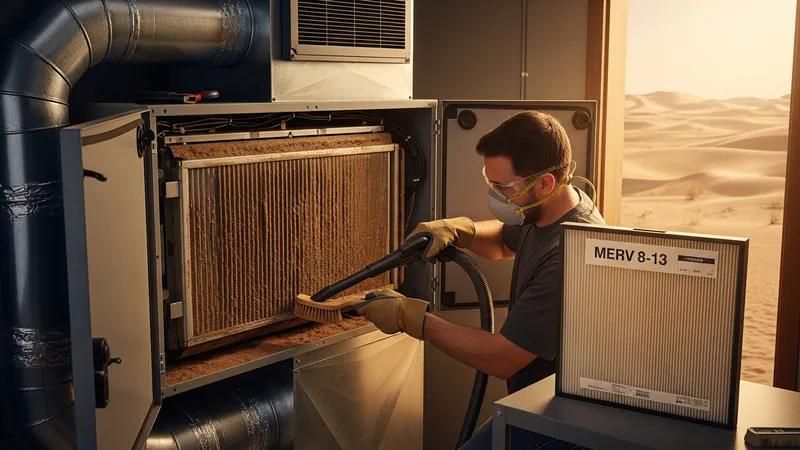
Duct cleaning and sealing can reduce recirculated dust and improve delivered airflow, though outcomes vary by system condition. Duct leakage testing or visual inspection may reveal bypasses or collection points where dust accumulates. In some cases, localized cleaning of supply or return plenums and coils may restore heat-exchange performance more quickly than system-wide interventions. These approaches are typically described as possible measures rather than guaranteed solutions, and their applicability often depends on the extent of dust infiltration and system design.
Indoor air quality considerations may also incorporate ventilation and humidity control strategies adapted to arid climates. Mechanical ventilation rates and heat-recovery approaches can affect indoor particle concentrations and energy use. The U.S. Environmental Protection Agency provides general guidance on indoor air quality that can inform decisions about filtration and ventilation without prescribing a specific action for every building. In desert climates, coordination between filtration upgrades and airflow capacity checks can help ensure that enhanced filters do not degrade cooling performance.
Practical monitoring practices often include visual coil inspections, pressure drop tracking across filters, and periodic particle sampling in sensitive indoor environments such as healthcare or laboratory spaces. These monitoring steps can indicate when more intensive cleaning or filter changes are warranted. In typical residential contexts, occupants or managers may rely on a combination of scheduled checks and observations of indoor comfort and system cycling to determine when service is needed, recognizing that dust load and occupancy patterns can shift maintenance needs over time.
Seasonal servicing commonly emphasizes spring inspections ahead of peak cooling season to verify system readiness. Typical activities may include condenser coil cleaning, verification of thermostat calibration, condensate drain inspection, electrical connection checks, and basic refrigerant pressure measurement. Because refrigerant handling and recovery in the United States are regulated, work involving refrigerant requires technicians certified under EPA Section 608 for controlled substances. The Section 608 program and related EPA resources provide procedural and certification information relevant to refrigerant work.
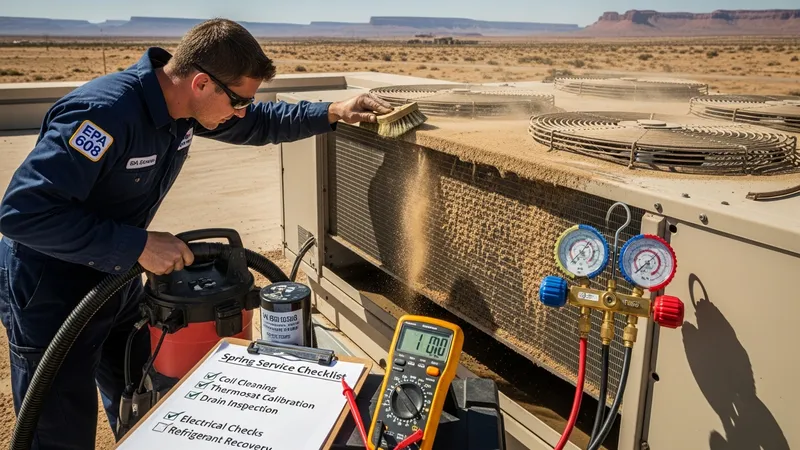
Routine seasonal checks can reveal wear patterns specific to desert operation, such as accelerated compressor start-capacitor stress or coil fouling from windblown particulates. Condensate management is often an overlooked seasonal item: clogged drains can lead to secondary moisture problems when systems cycle heavily. Service schedules that consider both mechanical components and drainage paths may reduce the likelihood of operational interruptions during the hottest months, though results vary by system age and installation details.
Refrigerant types and phase-outs have been evolving in the U.S. regulatory context, which can affect long-term service planning. Technicians and building managers often document existing refrigerant types and service histories so that future maintenance or retrofits can be evaluated in light of regulatory changes. Because regulatory frameworks influence available refrigerants and repair practices, referencing authoritative sources such as the EPA can provide context for compliance and equipment lifecycle considerations without implying specific choices for every system.
Scheduling and documentation practices commonly recommended in technical guidance include recording runtime hours, noting measured pressures and temperatures, and logging component replacements. These records may help identify trends, such as gradual loss of capacity or increasing electrical draw, which often precede failures. In desert climates, where systems often operate for extended periods, such trend information can inform maintenance frequency planning and component-level attention as part of a neutral, evidence-based approach to service.
Building-envelope measures can substantially affect cooling demand in arid climates, and service strategies often consider these factors alongside direct HVAC interventions. Roof reflectivity, attic insulation levels, and window shading can reduce internal heat gains that drive cooling loads. In U.S. residential contexts, reflective roofing coatings and insulated attic barriers are commonly referenced as ways to moderate attic temperatures, which in turn can reduce stress on rooftop or indoor cooling equipment. These measures are typically evaluated for expected operational impact rather than presented as guaranteed outcomes.
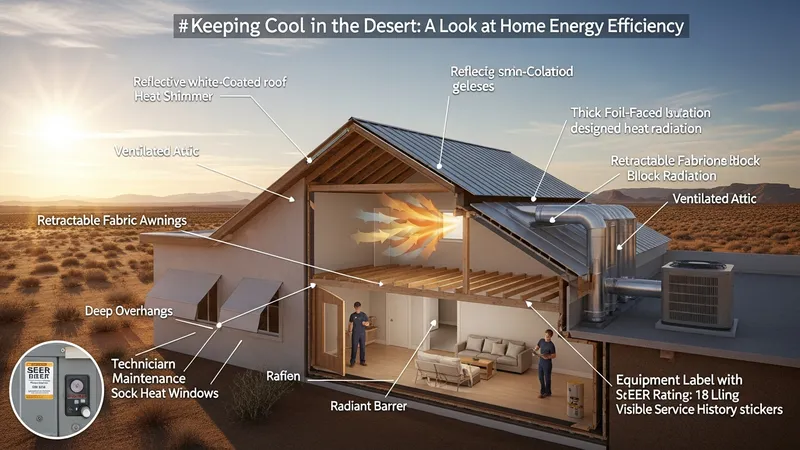
Equipment efficiency ratings and expected lifespans are relevant when assessing long-term reliability. Modern central systems used in U.S. homes often feature seasonal energy efficiency ratios (SEER) in a range that may be higher than older installations; equipment age, maintenance history, and runtime patterns typically influence when replacement or major overhaul is considered. In many installations, a service-oriented lifecycle approach—tracking maintenance interventions and performance metrics—helps inform timing of larger investments in equipment renewal without asserting an absolute replacement schedule.
Thermostat and controls settings can affect both comfort and runtime accumulation. Programmable or smart controls may enable more refined temperature management and setback strategies that reduce hours of high-load operation during peak heat. However, control changes typically interact with occupant preferences and building characteristics, so their practical effect on system wear and energy use is often described as conditional. Practical service guidance often pairs control adjustments with measured follow-up to assess actual runtime and load changes in the specific building.
Long-term reliability considerations also include attention to installation quality, refrigerant charge accuracy, and ductwork condition. Systems that are properly sized, installed, and commissioned often show more predictable performance over time, while systems that operate under persistent airflow restrictions or improper charge may experience accelerated wear. Maintenance planning in desert climates often combines equipment-level care with building improvements to address the underlying causes of elevated cooling demand and component stress, presented as considerations rather than prescriptive mandates.