
Unintended exposure or transmission of sensitive information within digital systems occurs when data that should be protected becomes accessible to unauthorized parties. This can involve personally identifiable information, financial records, intellectual property, or proprietary business data. Exposure may happen through technical failures, human mistakes, inadequate processes, or deliberate misuse. The resulting flows of information can be internal (between employees or applications) or external (to contractors, cloud services, or the public internet). Understanding how data moves and where controls typically fail helps clarify what is meant by this class of incidents.
Incidents of information exposure often involve multiple factors acting together rather than a single point of failure. For example, an employee email with sensitive content may be sent to the wrong recipient, a cloud storage container may be misconfigured, or a third-party integration may leak identifiers that enable broader access. Detection can be delayed when logging and monitoring are incomplete. In United States contexts, organizations may also face legal and regulatory reporting requirements when certain categories of data are exposed, which can influence prioritization of detection and response activities.
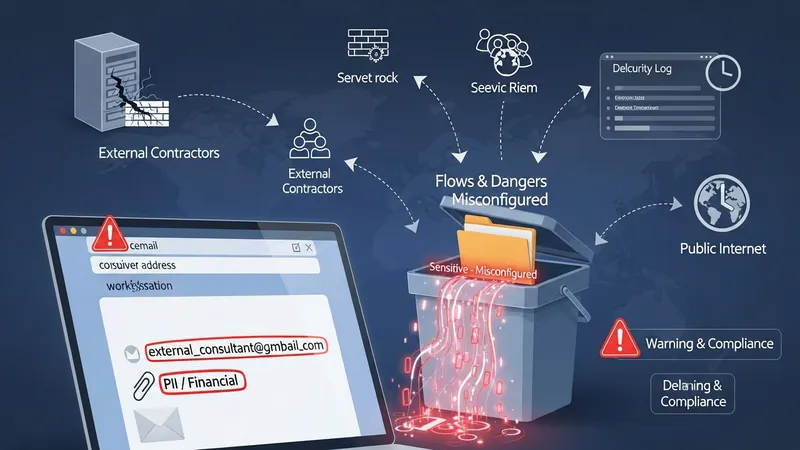
Data protection tools such as those listed may be part of a broader defensive architecture but typically address only certain vectors. Agent-based endpoint controls can detect data movements from a device, while network or gateway controls may look for sensitive content in transit. Cloud-native controls focus on SaaS and object storage. Selection and configuration of these tools often require mapping where critical data resides and understanding workflows that create legitimate data flows. Implementations may involve trade-offs among usability, coverage, and operational cost in United States enterprise settings.
The human element frequently contributes to exposures and can include inadvertent disclosure, misuse, and insufficient training. In many United States incidents, misdirected emails, shared links with overly permissive access, and improper use of personal storage accounts have been implicated. Organizational policies, access reviews, and role definitions can reduce likelihood but may not fully eliminate risk. Detection capabilities that surface anomalous sharing patterns or access spikes can help identify human-originated exposures sooner, though such systems often require tuning to reduce false positives.
Technical misconfigurations remain a common cause in cloud and on-premises environments. For example, publicly accessible storage containers or overly permissive access control lists can expose large datasets. In the United States, multiple high-profile disclosures have involved misconfigured cloud storage or unsecured APIs. Regular automated scanning and inventory of data stores, combined with clear change management and baseline configurations, can help find configuration drift. However, tools alone may not prevent exposures if organizational processes do not enforce consistent configurations.
Third-party and supply-chain relationships also influence leakage risk. Integrations with vendors, contractors, and platform providers can create additional paths for data to leave an organization’s control. Contractual protections, vendor security assessments, and least-privilege integration patterns can reduce exposure but often require sustained governance effort. In the United States, contractual and regulatory obligations may dictate specific controls or reporting timelines when third-party access is involved, adding a compliance layer to technical remediation choices.
Detection, monitoring, and logging capabilities typically determine how quickly an exposure is identified and contained. Security information and event management (SIEM) solutions, cloud-native logging, and DLP telemetry can provide signals of suspicious transfers or data copying. In many United States organizations, gaps in log retention, inconsistent telemetry coverage, or siloed visibility across cloud and on-premises systems can delay detection. Investing in consolidated visibility may improve response times but usually requires careful planning to integrate diverse sources of telemetry and to preserve privacy and legal considerations.
In summary, unintended exposure of sensitive information arises from intersecting human, technical, and third-party factors and is influenced by organizational controls and regulatory context. The examples above illustrate representative data-centric tools that often form part of mitigation strategies used in United States environments. Subsequent pages examine practical components and considerations in more detail.
Data leakage in United States contexts can be categorized by vector: human error, technical misconfiguration, insider misuse, and third-party exposures. Human error often involves mistaken email recipients, incorrect sharing permissions in collaboration platforms, or use of unsanctioned file-sharing services. Technical misconfiguration examples include public cloud object storage with excessive permissions or unsecured APIs that return sensitive fields. Insider misuse may be malicious or negligent and can involve unauthorized copying of data to personal devices. Third-party exposures occur when vendors or integrators with legitimate access have weak controls or suffer compromise, creating an indirect path for data to leave an organization.
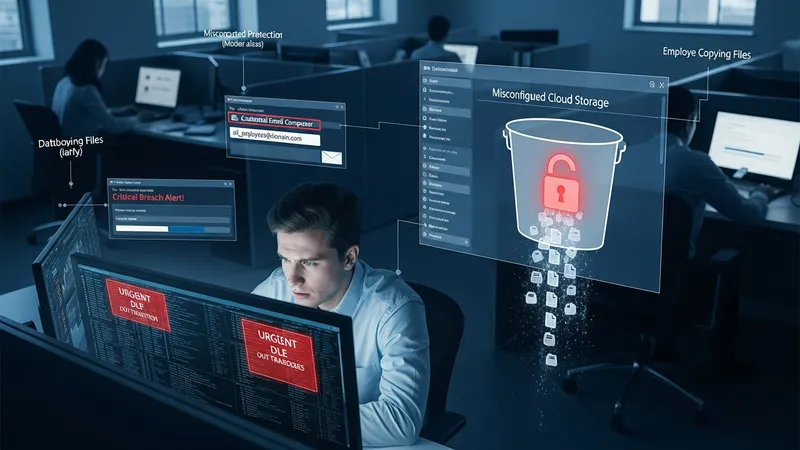
Each cause may create different detection and remediation challenges. Human-origin incidents can be fast-moving but limited in scope, and may be detected through user activity monitoring or DLP alerts. Misconfiguration incidents can expose large datasets and may be discovered through routine scans, external researchers, or regulatory reporting. Insider misuse often requires behavioral analytics, access review processes, and stronger separation of duties to detect. Third-party risks typically require contractual controls and periodic reassessment of vendor security posture to identify latent exposures in supply chains operating within the United States.
Common patterns observed in United States incident reports show that cloud misconfigurations and improper access controls have been prominent in recent years. For organizations using shared services or public cloud providers, automated inventory and configuration monitoring may surface unintended exposures such as public object storage or overly permissive IAM policies. While automation can reduce manual error, it may also introduce complexity; units within an organization may provision resources independently, creating inconsistent baselines that allow leakage unless governance is maintained.
Considerations for addressing these causes often involve layered controls and process adjustments. For example, training programs may reduce inadvertent disclosures, while pre-deployment configuration checks and automated scanning can address technical misconfigurations. Role-based access control and just-in-time access provisioning can limit opportunity for insider misuse. In United States regulatory contexts, specific data types may require technical safeguards and documentation, making it important to align preventive measures with compliance obligations and operational realities.
Exposures of sensitive information can carry multiple security and compliance implications for organizations operating in the United States. From a security standpoint, leaked data can enable identity theft, credential stuffing, targeted phishing, or intellectual property loss. From a regulatory perspective, various federal and state laws may require notification, remediation, or specific safeguards depending on data type. For example, healthcare data is subject to the Health Insurance Portability and Accountability Act (HIPAA), financial data may implicate the Gramm-Leach-Bliley Act (GLBA), and state breach notification laws often specify timelines and content for consumer notices following a confirmed exposure.
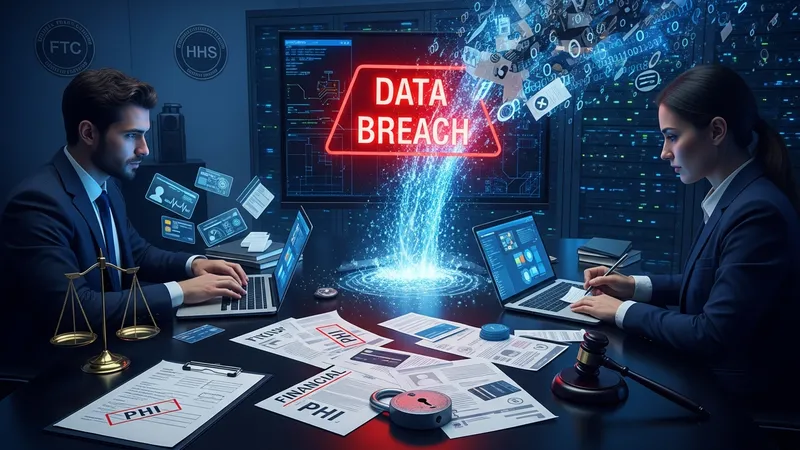
Regulatory enforcement in the United States can involve agencies such as the Federal Trade Commission (FTC) and sector-specific regulators like the Department of Health and Human Services (HHS) Office for Civil Rights for HIPAA matters. Enforcement actions may be based on failure to implement reasonable security measures or on inadequate response to an exposure. Organizations may face investigations, remediation orders, or civil penalties, and must typically balance legal obligations with operational response activities, preserving relevant logs and documentation during incident analysis.
Reputational and contractual consequences can be significant as well. Customers, partners, and investors often expect prompt, transparent handling of data exposures. In many United States commercial relationships, contracts include confidentiality clauses and incident reporting obligations; breach-related failures may trigger indemnities or liability clauses. While the precise financial impact varies, organizations frequently find that remediation, legal fees, potential fines, and operational disruption together create material cost and continuity considerations that inform investment in preventive controls.
Legal and regulatory expectations can also shape technical design choices. For instance, data minimization and encryption-at-rest are commonly referenced approaches in regulatory guidance and may influence how organizations store or transmit sensitive fields. Compliance frameworks and standards, including those published by NIST, often provide implementation guidance that organizations in the United States use to align security practices with regulatory obligations and risk management objectives.
Mitigation typically combines policy, people, and technology. Policy measures include data classification schemes that identify what types of information require heightened controls, retention rules that limit exposure windows, and clear vendor requirements for third-party access. Training and awareness programs may reduce accidental disclosures by informing employees about acceptable sharing practices and approved tools. Regular access reviews and role definitions can reduce excessive permissions, which in turn limits the attack surface if accounts are compromised or misused within United States organizations.

Technical controls often include data loss prevention (DLP) tooling, encryption, access control mechanisms, and identity and access management (IAM). DLP systems can detect specific patterns or content and apply controls such as blocking, quarantining, or alerting on suspicious transfers. Encryption may protect data at rest and in transit, reducing the utility of exposed data if keys are managed appropriately. IAM practices such as multi-factor authentication and least-privilege access reduce the likelihood of unauthorized access that can lead to leakage.
Frameworks and standards commonly used in the United States, such as the NIST Cybersecurity Framework and related NIST publications, can guide selection and deployment of controls. These frameworks emphasize identifying critical assets, protecting them through technical and administrative measures, detecting incidents, and responding effectively. Applying such frameworks typically involves gap assessments, prioritized remediation plans, and ongoing monitoring to track the effectiveness of mitigations and to adapt to changes in technology and business processes.
Operational considerations include regular configuration audits, continuous monitoring, and targeted testing such as red-team or tabletop exercises that simulate exposure scenarios. Vendor risk management processes can assess third-party security assumptions and contractual obligations. When implementing controls, organizations often weigh coverage, false-positive rates, and user impact; these trade-offs influence tuning and staffing decisions for security operations teams in United States enterprises.
Effective response to detected exposures requires clear roles, documented procedures, and integrated technical capabilities. Detection relies on telemetry from endpoints, cloud services, DLP logs, and network devices; consolidating these signals into a SIEM or centralized monitoring platform can facilitate timely triage. Forensic analysis may require preservation of logs and evidence, and organizations operating in the United States should be prepared to retain relevant records in line with legal obligations and potential regulatory inquiries.

Notification and reporting obligations following a confirmed exposure can vary by jurisdiction and data type within the United States. State breach notification laws commonly require prompt consumer notification when certain personal data elements are exposed. Sectoral regulations such as HIPAA may require notification to regulators and affected individuals under defined conditions. Legal counsel and compliance teams typically review incident facts to determine applicable timelines and content for any required notices.
Recovery activities often involve containment, remediation of root causes, and strengthening controls to prevent recurrence. Containment may include isolating affected systems, revoking compromised credentials, and applying configuration fixes. Post-incident reviews and lessons-learned exercises can inform policy and technical changes, such as enhancing monitoring coverage, adjusting access models, or improving employee training. Organizations may also coordinate with law enforcement or federal resources such as CISA when exposures involve criminal activity or widespread infrastructure concerns.
Maintaining preparedness through periodic exercises, playbooks, and clear escalation pathways can reduce response time and improve decision-making during an event. In United States settings, aligning incident response plans with regulatory reporting requirements and contractual communication obligations helps ensure that operational response and external disclosures are consistent and timely. Continued investment in detection, governance, and cross-functional coordination typically supports improved outcomes following data exposure events.