
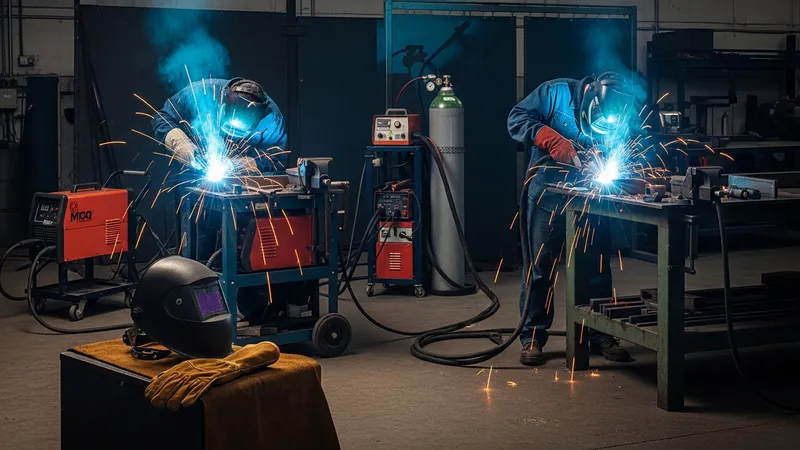
A functional overview of common tools and equipment used for joining and cutting metals focuses on categories of devices rather than specific purchasing guidance. This overview describes how electrical power sources, hand-held torches, consumable electrodes and filler wires, gas regulators, clamps, and personal protective equipment typically interact in a welding or fabrication setting. The aim is to clarify primary functions: creating and controlling the heat source, supplying filler or flux, protecting operators, and holding workpieces to permit accurate metal fusion.
These tool categories are used across construction, industrial maintenance, and shop fabrication in the United States and often vary by process: gas metal arc welding (GMAW or MIG), gas tungsten arc welding (GTAW or TIG), and shielded metal arc welding (SMAW or stick). Equipment choices may reflect material type, thickness, joint geometry, site conditions, and applicable safety rules from U.S. regulators and standards organizations. The following examples illustrate representative items commonly encountered in these environments.
Power sources for welding may be transformer-based or inverter-based and can deliver constant current (CC) or constant voltage (CV) outputs depending on the process. In the United States, lighter consumer units for hobby or small fabrication tasks may cost approximately $200–$1,200, while industrial inverter systems used in shop and plant work may range higher; these figures are indicative and may vary. Duty cycle, portability, input voltage (120V vs. 240V), and control features often determine perceived suitability for a particular process rather than an absolute measure of quality.
Consumables such as filler wires, electrodes, fluxes, and shielding gases serve distinct metallurgical roles. Choice of filler metal is typically matched to base metal chemistry and mechanical requirements; for example, certain electrode classifications used in structural steel are widely referenced in U.S. welding practice. Shielding gas selection may influence penetration and arc stability, and regulators and hose assemblies are used to control flow from compressed gas cylinders compliant with U.S. Department of Transportation (DOT) rules and workplace standards enforced by the United States Occupational Safety and Health Administration (OSHA).
Personal protective equipment (PPE) commonly includes welding helmets with appropriate filter shades, flame-resistant clothing, welding gloves, and respiratory protection when fume levels may exceed recommended exposure limits. U.S. employers and operators typically consult OSHA guidance and standards for eye, face, and respiratory protection; relevant sources include the OSHA welding, cutting, and brazing safety guidance and consensus standards such as those from the American Welding Society (AWS). Selection of PPE often reflects welding process, material type, and workplace hazard assessments.
Clamping, grounding, and workholding fixtures play a supporting role by stabilizing parts and ensuring reliable electrical return paths for arc processes. Portable grinders, wire brushes, and chipping hammers are commonly paired with welding operations for joint preparation and post-weld cleaning. Other accessories such as preheat torches, thermal cutting tools, and extraction devices for fume control often appear in larger shops; their presence may relate to local job requirements or code considerations rather than individual operator preference.
Equipment maintenance and regulatory compliance are central to safe and effective welding operations in the United States. Regular inspection of cables, leads, regulators, and PPE along with adherence to OSHA and DOT rules for gas cylinder handling can reduce operational disruptions and exposures. The next sections examine practical components and considerations in more detail.
Power sources convert incoming electrical supply into controlled energy suitable for different welding arcs and processes. In the United States, common categories include transformer-based units that provide robust, simple output characteristics and inverter-based systems that typically offer lighter weight, finer control, and programmable settings for tasks such as pulse TIG. Constant voltage outputs are often paired with MIG processes for steady wire feed control, while constant current outputs are commonly associated with TIG and stick processes where current stability matters during electrode manipulation. Considerations like input voltage (120V versus 240V), available amperage, and duty cycle ratings usually influence whether a machine is used on-site or in a fabrication shop.
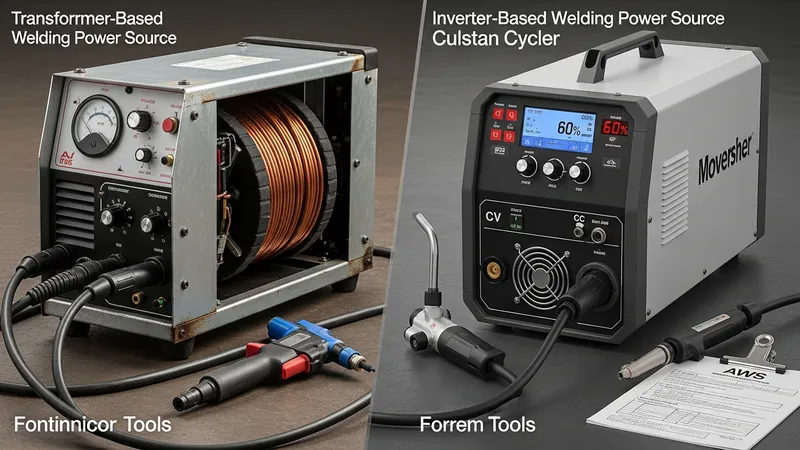
Duty cycle specifications—expressed as a percentage of a 10-minute period at a given amperage—give an indication of how long a machine may operate before requiring cooldown. In U.S. industrial practice, machines with higher duty cycles are typically chosen for production welders to meet throughput needs. Users in construction or maintenance tending to intermittent welds may prioritize portability and simple setup. Manufacturer datasheets and industry references such as the American Welding Society provide technical comparisons that are often consulted for application matching rather than definitive prescriptions.
Arc control and ancillary features can affect weld quality and operator handling. For MIG welding, wire feed speed and voltage interact to shape bead profile and penetration; for TIG, high-frequency start and gas preflow/postflow timing can influence arc starts and tungsten contamination risk. Electronic controls in modern inverters may allow presets for common metals and thicknesses; these settings commonly appear in U.S. fabrication practices to reduce variability between operators without implying a single required configuration for all jobs.
Power delivery considerations also include site electrical capacity and grounding practices in the United States. Heavy industrial equipment may require three-phase service or dedicated circuits, while portable units often run on single-phase 240V. Proper grounding, cable sizing, and adherence to the National Electrical Code (NEC) and local electrical authority guidance are often referenced during installation to reduce electrical hazards and ensure reliable equipment operation.
Consumables encompass filler metals, electrodes, and fluxes that become part of the welded joint or protect the molten pool during fusion. Electrode classifications used in the United States, such as those standardized by AWS and referenced in fabrication specifications, indicate tensile properties, usability positions, and coating types (for example, low-hydrogen or rutile coatings). Filler wire for MIG or TIG is typically specified by alloy type (e.g., ER70S-6 for mild steel or ER308L for stainless steel) and diameter; selection is often matched to base metal and desired mechanical properties rather than being universally prescriptive.
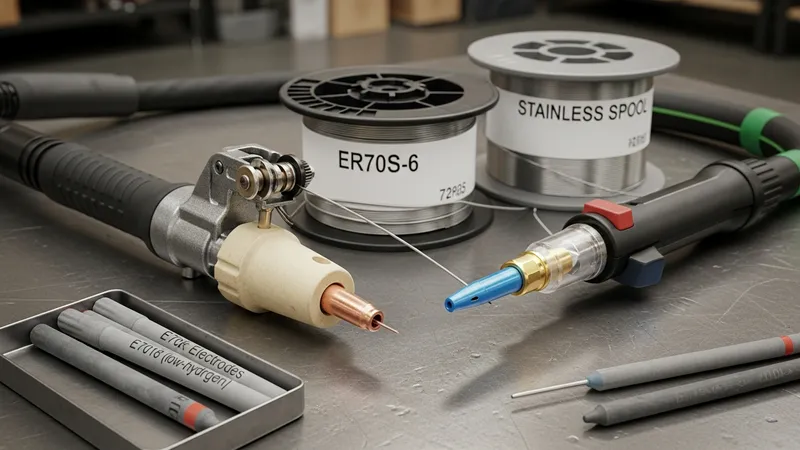
Torch assemblies differ by process: a MIG gun incorporates a contact tip and nozzle with integrated wire feed, while a TIG torch holds a tungsten electrode and directs inert gas to shield the arc. Consumable wear—tip erosion, nozzle spatter, and electrode degradation—affects arc characteristics and may require routine replacement. In U.S. shops, replacement schedules often follow observed wear patterns and quality checks. Proper maintenance of the torch, including insulation and gas lines, commonly reduces contamination and improves consistency without implying a single maintenance interval universally appropriate for all environments.
Shielding gas delivery and regulator selection play a metallurgical role by protecting the molten pool and influencing arc chemistry. Argon is commonly used for TIG on stainless and aluminum; argon–CO2 mixes are frequently used in MIG for carbon steel to balance arc stability and penetration. Regulators and flowmeters must be compatible with the cylinder valve standards found in U.S. supply chains and stored according to DOT and OSHA guidance. Gas flow rates are often expressed as cubic feet per hour (cfh) and adjusted per torch size and joint type rather than fixed values mandated across all contexts.
Electrode and filler selection may also reflect welding position, joint preparation, and post-weld requirements such as impact toughness or corrosion resistance. For example, certain low-hydrogen stick electrodes commonly used in structural settings are selected to reduce the risk of hydrogen-induced cracking in thicker sections. Welding procedure specifications (WPS) and procedure qualification records (PQR) commonly referenced in U.S. industrial practice document materials and consumable choices for reproducible outcomes in regulated work.
Personal protective equipment for welding in the United States typically addresses eye and face protection, respiratory protection, hand and body coverage, and hearing protection where applicable. Welding helmets with auto-darkening filters are frequently specified with shade ranges appropriate to the process and amperage; shade selection often follows consensus standards and OSHA guidance for eye protection (for example, OSHA 1910.133). Flame-resistant clothing, leather gloves, and proper footwear are commonly used to reduce burn and spark hazards. Employers and operators often consult the American Welding Society and OSHA for applicable recommendations and compliance expectations rather than relying on a single prescriptive item.
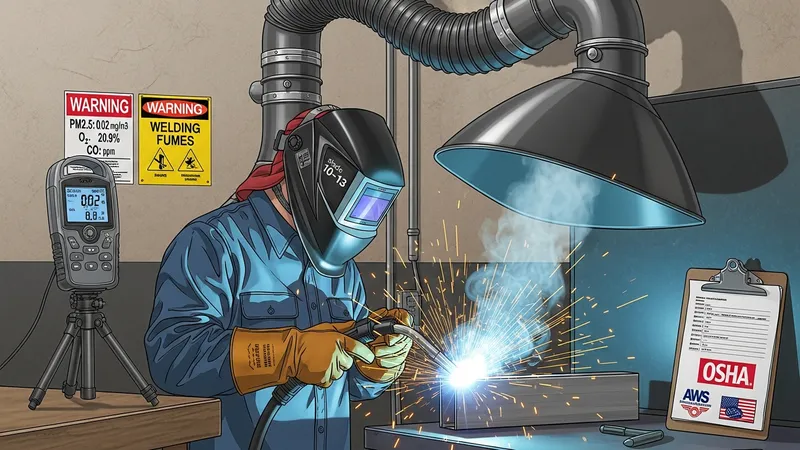
Respiratory protection considerations are typically guided by workplace air monitoring and applicable exposure limits. In the United States, employers may refer to OSHA permissible exposure limits and NIOSH recommendations when evaluating fume hazards from processes such as welding stainless steel, which can generate metal fume constituents that are addressed in industrial hygiene surveys. When airborne concentrations may exceed guidance levels, respirators certified to the National Institute for Occupational Safety and Health (NIOSH) standards are often considered as part of a comprehensive control strategy that prioritizes ventilation and extraction.
Workplace ventilation and local fume extraction systems are frequently integrated into shop layouts to manage airborne contaminants. Portable fume extractors and fixed exhaust hoods are commonly used in fabrication shops in the United States to capture fumes at the source. Compliance with local building codes, electrical requirements for extraction equipment, and recommendations from consensus standards organizations are regular considerations when planning or upgrading ventilation for welding operations.
Training and documented safe work procedures are important elements of safety programs in U.S. welding operations. OSHA outreach materials, AWS training courses, and employer-led programs often cover hazard recognition, PPE selection, hot work permits, and safe cylinder handling. These components typically coexist with equipment selection and maintenance schedules to create an operational framework that reduces exposures and supports consistent practice across teams and job sites.
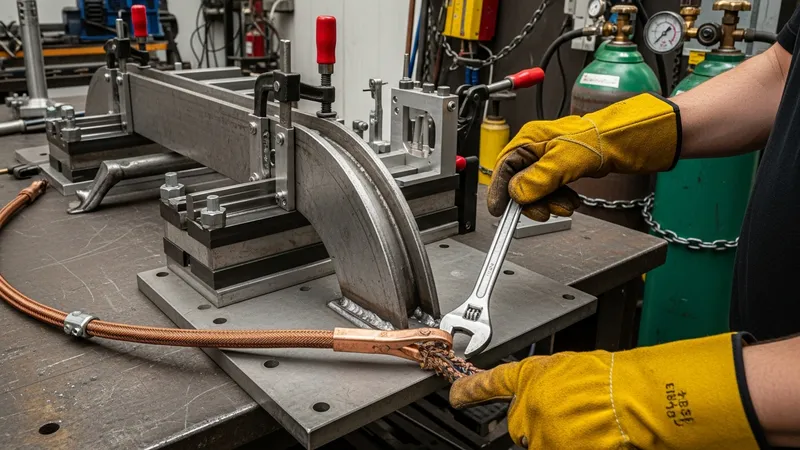
Clamps, grounding connections, and workholding fixtures support accuracy, fit-up, and electrical continuity in welding tasks. Magnetic clamps, C-clamps, pipe tongs, and dedicated jigs are often used in U.S. fabrication shops to hold parts in position for tack welding and final passes. Ground connections must provide a low-resistance return path for the welding current and are commonly inspected for corrosion or loose contact prior to work. Proper workholding can reduce distortion and rework, particularly when combined with preheat or controlled interpass temperatures for thicker sections.
Gas regulators, hoses, and fittings are part of the gas delivery system and must be compatible with cylinder standards used within the United States. Color coding and valve standards may assist in identification, and regulators are maintained per manufacturer recommendations and inspected for leaks before use. Hose routing, protection from hot work, and secure cylinder storage per OSHA guidelines are routine considerations in U.S. shops and construction sites where compressed gases are present.
Accessories such as grinders, chipping hammers, wire brushes, and bench tools are used for joint preparation and weld cleanup. Abrasive wheel users in the United States commonly follow OSHA requirements for guarding and eye protection during use. Tools for measuring gap, alignment, and fillet weld size—such as welding gauges and feeler gauges—are frequently used to confirm joint dimensions before and after welding, supporting quality control and adherence to fabrication specifications.
Fume extraction, local ventilation, and shop layout may influence accessory selection and workflow. Many U.S. facilities incorporate movable extraction arms, downdraft tables, or fixed hoods to address airborne contaminants near welding sources. Planning for electrical supply, tool storage, safe cylinder placement, and maintenance access commonly reduces operational interruptions and supports consistent, safety-focused workflow in fabrication and field welding contexts.