
Organizations commonly deploy a combination of policies, controls, and technologies to limit unauthorized access, preserve confidentiality, and maintain availability of corporate information. This approach addresses user identities, network boundaries, endpoint devices, application and data lifecycles, and contingency processes. The concept centers on layered defenses that reduce the likelihood and impact of compromise rather than promising absolute prevention.
Implementation typically involves administrative controls (policies and training), technical controls (authentication, encryption, logging), and physical controls (device management and secure facilities). In the United States context, frameworks and guidance from agencies such as NIST and CISA often inform how these layers are organized and measured. Legal and contractual obligations may also influence the specific safeguards a firm adopts.

Identity and access controls often form a first line of defense. In U.S. practice, firms may adopt multi-factor authentication for remote access and administrative accounts, and apply least-privilege principles to user roles. NIST materials illustrate ways to design authentication strength and lifecycle processes. These measures may reduce certain attack vectors such as credential stuffing or unauthorized lateral movement when combined with monitoring and account lifecycle policies.
Network and endpoint protections typically include segmentation, intrusion detection, and endpoint detection and response tools. U.S.-based organizations often reference CISA alerts for common threat patterns and exploit techniques. Segmentation can limit the blast radius of intrusions, while centrally managed endpoint tools may provide telemetry that supports detection. These controls may increase operational overhead and thus often require selection of tools and workflows that align with a firm’s size and risk profile.
Encryption and key management are central to protecting stored and transmitted information. Firms commonly use industry-standard protocols such as TLS for in-transit protection and FIPS-validated encryption modules for sensitive data at rest where compliance demands may apply. Proper key lifecycle management, backup encryption practices, and documentation may reduce the likelihood of data exposure during incidents. Federal guidance can help shape acceptable cryptographic baselines for U.S. firms.
Data backup and recovery practices contribute to business resilience. In many U.S. incidents, having segmented, immutable, and tested backups may reduce operational disruption from ransomware or destructive events. Backup frequency, retention, and isolation strategies typically vary by data criticality and regulatory requirements. Regular exercises that validate restore capability often reveal configuration gaps before an operational incident occurs.
Risk management and incident response integrate the technical and administrative elements into an organizational process. U.S. firms often map assets, identify likely threats, and maintain incident response playbooks aligned to regulatory expectations. Continuous monitoring, logging, and periodic tabletop exercises may inform adjustments to controls. The next sections examine practical components and considerations in more detail.
Access control practices focus on defining who can access specific data and under what conditions. In the United States, many firms reference NIST guidance when defining authentication strength, privilege separation, and account lifecycle processes. Multi-factor authentication (MFA) for remote and privileged accounts is commonly cited as a basic control that may reduce risk from stolen credentials. Role-based access control (RBAC) and periodic access reviews may help align entitlements with job functions, and audit logging may support investigations when access anomalies occur.
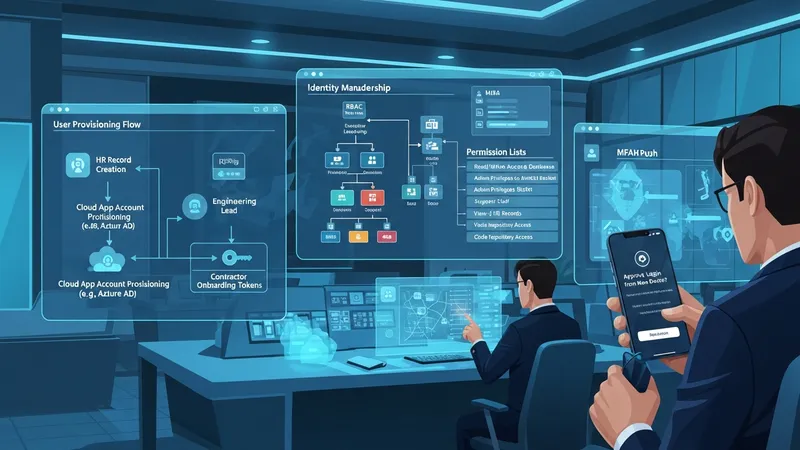
Identity governance often interacts with human resources and contractor onboarding processes. For U.S.-based organizations, integrating identity provisioning with HR systems can reduce orphaned accounts and stale privileges. Conditional access policies may consider device posture, network location, and user risk signals before granting elevated access. These controls may add operational steps but can be tuned to balance security needs with productivity considerations.
Single sign-on and federated identity approaches can centralize authentication and reduce password fatigue if implemented with adequate protections. When firms adopt cloud services, careful mapping of identity trust relationships and least-privilege permissions is typically necessary. Auditing of authentication events and use of identity threat detection tools can surface suspicious patterns early, but may require retention planning to meet both operational and compliance needs.
Insider considerations often influence access control design. Regular entitlement reviews, separation of duties for critical transactions, and logging of administrative actions may help detect misuse. For U.S. companies subject to regulations such as HIPAA or GLBA, access controls and documented justification for access assignments may form part of compliance evidence. These practices typically evolve as asset inventories and role definitions mature.
Network architecture can limit exposure by segmenting systems based on function and sensitivity. In U.S. settings, firms commonly separate user workstations, servers, and externally facing services into distinct zones, applying tailored firewall and access controls. Secure remote access solutions, such as VPNs or zero-trust network access models, may be used to authenticate devices and users before granting connectivity. Documentation of network boundaries and data flows may assist incident response teams in tracing potential impact.
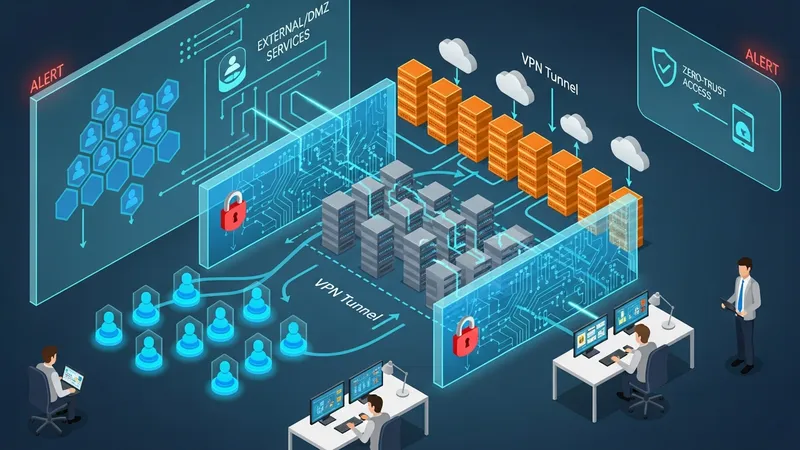
Endpoint protection strategies may combine device hardening, centrally managed anti-malware, and endpoint detection and response (EDR) tooling. U.S. organizations sometimes adopt EDR to collect process and connection telemetry that could indicate suspicious behavior. Endpoint configuration baselines and patch management schedules typically reduce exploitability of known vulnerabilities, though scheduling and testing are often needed to align with business operations.
Monitoring and logging of network and endpoint activity can support detection of anomalous patterns. Security information and event management (SIEM) systems are used in many U.S. firms to centralize alerts and support correlation across sources. Logging retention choices are often influenced by storage costs and regulatory retention requirements, and firms may apply tiered retention policies to retain high-value telemetry longer for forensic use.
Operational considerations include balancing visibility with privacy and cost. For example, capturing detailed telemetry across all endpoints may aid detection but create storage and review burdens. Many U.S. companies pilot controls on representative subsets before broad rollout and use threat intelligence feeds from CISA or sector-specific sources to prioritize controls against prevalent adversary tactics.
Encryption aims to protect data confidentiality both in transit and at rest. U.S. guidance often recommends industry-standard algorithms and documented key management practices. Firms may use transport-layer security (TLS) for web and API traffic, and storage-level encryption for databases and backups. Keys may be managed in hardware security modules or cloud key management services, with separation of duties for key custodians often applied to reduce insider risk.
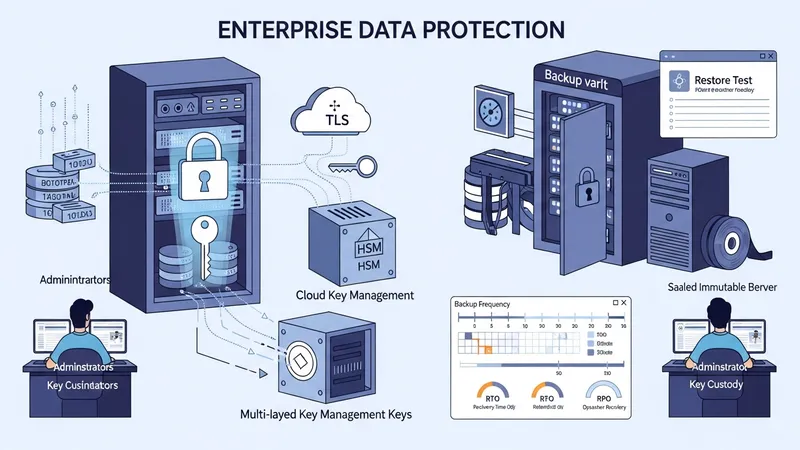
Backup strategies typically define which data is protected, backup frequency, retention periods, and restoration procedures. In the U.S., organizations may implement immutable or air-gapped backups to reduce the risk of modification after an incident. Regular restore tests often reveal configuration issues or data integrity problems, and test results may inform adjustments to backup cadence and scope to align with recovery time and recovery point objectives.
Data lifecycle policies help determine where and how long data is retained, and when it should be securely disposed. Mapping data classifications to handling requirements may assist in applying encryption, access controls, and backup priorities consistently. For regulated sectors in the United States, retention and disposal policies can interact with legal and compliance obligations, so documentation and audit trails frequently accompany lifecycle decisions.
Practical considerations include cost and complexity trade-offs. Stronger encryption and longer retention can raise storage and key management burdens, and frequent backups may require additional bandwidth and compute resources. Many U.S. firms prioritize protections for sensitive categories—such as personally identifiable information or intellectual property—while applying more standard controls to lower-risk datasets to balance resources and protection needs.
Risk management frames which assets and threats receive attention based on likelihood and impact. In the United States, firms often adopt risk assessment methods that inventory critical assets, identify plausible threat scenarios, and estimate potential operational impacts. These assessments typically guide control selection and investment, and they may be revisited periodically or after significant changes to systems or business processes.

Incident preparedness often includes documented response plans, defined roles, and communication protocols. U.S. organizations commonly align playbooks to common incident types—such as ransomware or data leakage—and maintain contact lists for internal and external stakeholders. Tabletop exercises and simulated incidents may help reveal coordination gaps and inform improvements to detection, containment, and recovery procedures without implying guaranteed outcomes.
Detection and coordination capabilities often rely on a combination of internal teams and external partners. Many U.S. firms use managed services or engage third-party incident response providers for capabilities they do not maintain in-house. Contracts and information-sharing arrangements with trusted partners can clarify expectations for forensic support, legal coordination, and communication during incidents while preserving confidentiality requirements and evidence integrity.
Post-incident activities commonly include root cause analysis, lessons-learned reviews, and updates to controls and training programs. In regulated U.S. environments, obligations such as breach notification or reporting to sector-specific regulators may apply and influence the timeline and content of responses. Continuous improvement processes that incorporate operational experience can help firms better align controls to evolving risk patterns over time.